


Why Shoulder Injuries Are Common in Sports.
A rotator cuff tear is a common injury to the group of muscles and tendons that surround the shoulder joint. Recovery after a repair, particularly with physiotherapy, is a structured, multi-phase process to regain motion and strength.

Common Symptoms of a Rotator Cuff Tear
Symptoms can vary depending on whether the tear is acute (sudden) or degenerative (gradual).
-
Pain at Rest and Night: A deep, aching pain, especially when lying on the affected shoulder.
-
Weakness: Difficulty or inability to lift or rotate the arm, particularly when raising it overhead or out to the side.
-
Limited Range of Motion: Difficulty performing simple tasks like combing hair, reaching behind the back to tuck in a shirt, or reaching up to a shelf.
-
Crepitus: A crackling, popping, or grating sensation when moving the shoulder.
-
Sudden Pain/Snapping: If the tear is acute, a sudden, severe pain and snapping sensation may occur at the time of injury.
Anatomy of the Rotator Cuff
The rotator cuff is a group of four muscles and their tendons that surround the shoulder joint (the glenohumeral joint). Their primary role is to stabilize the shoulder by keeping the head of the humerus (upper arm bone) firmly seated in the shallow socket of the scapula (shoulder blade), and to rotate the arm. The muscles are often remembered using the acronym SITS:
-
Supraspinatus: Helps with initial abduction (lifting the arm out to the side).
-
Infraspinatus: Primarily responsible for external (lateral) rotation.
-
Teres Minor: Also assists with external (lateral) rotation.
-
Subscapularis: Primarily responsible for internal (medial) rotation.

Common Causes of a Rotator Cuff Tear
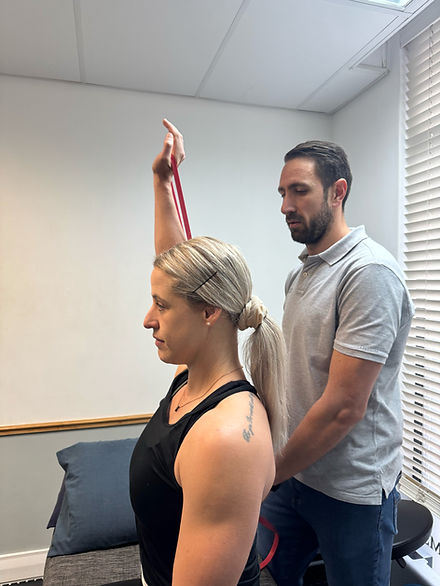
Rotator cuff tears generally occur due to two main factors: acute injury or chronic degeneration (wear and tear).
-
Degenerative Tears (Most Common) Aging: Natural breakdown of tendon tissue and decreased blood supply, most common in people over 50.
-
Repetitive Stress/Overuse: Repeated overhead activities (e.g., painting, carpentry, swimming, baseball, tennis) leading to tendon fraying.
-
Bone Spurs (Impingement): A bone spur (osteophyte) on the acromion (top of the shoulder blade) can rub on the tendons, causing irritation and tear over time.
-
Acute Traumatic Injury, Falls: Falling onto an outstretched hand (FOOSH) or directly onto the shoulder.
-
Lifting: Suddenly lifting a very heavy object with a jerking motion.
Common Symptoms of a Rotator Cuff Tear
Symptoms can vary depending on whether the tear is acute (sudden) or degenerative (gradual).
-
Pain at Rest and Night: A deep, aching pain, especially when lying on the affected shoulder.
-
Weakness: Difficulty or inability to lift or rotate the arm, particularly when raising it overhead or out to the side.
-
Limited Range of Motion: Difficulty performing simple tasks like combing hair, reaching behind the back to tuck in a shirt, or reaching up to a shelf.
-
Crepitus: A crackling, popping, or grating sensation when moving the shoulder.
-
Sudden Pain/Snapping: If the tear is acute, a sudden, severe pain and snapping sensation may occur at the time of injury.

 835 South African rand
 760 South African rand
 From 760 South African rand
 From 760 South African rand
- 375 South African rand
- 760 South African rand